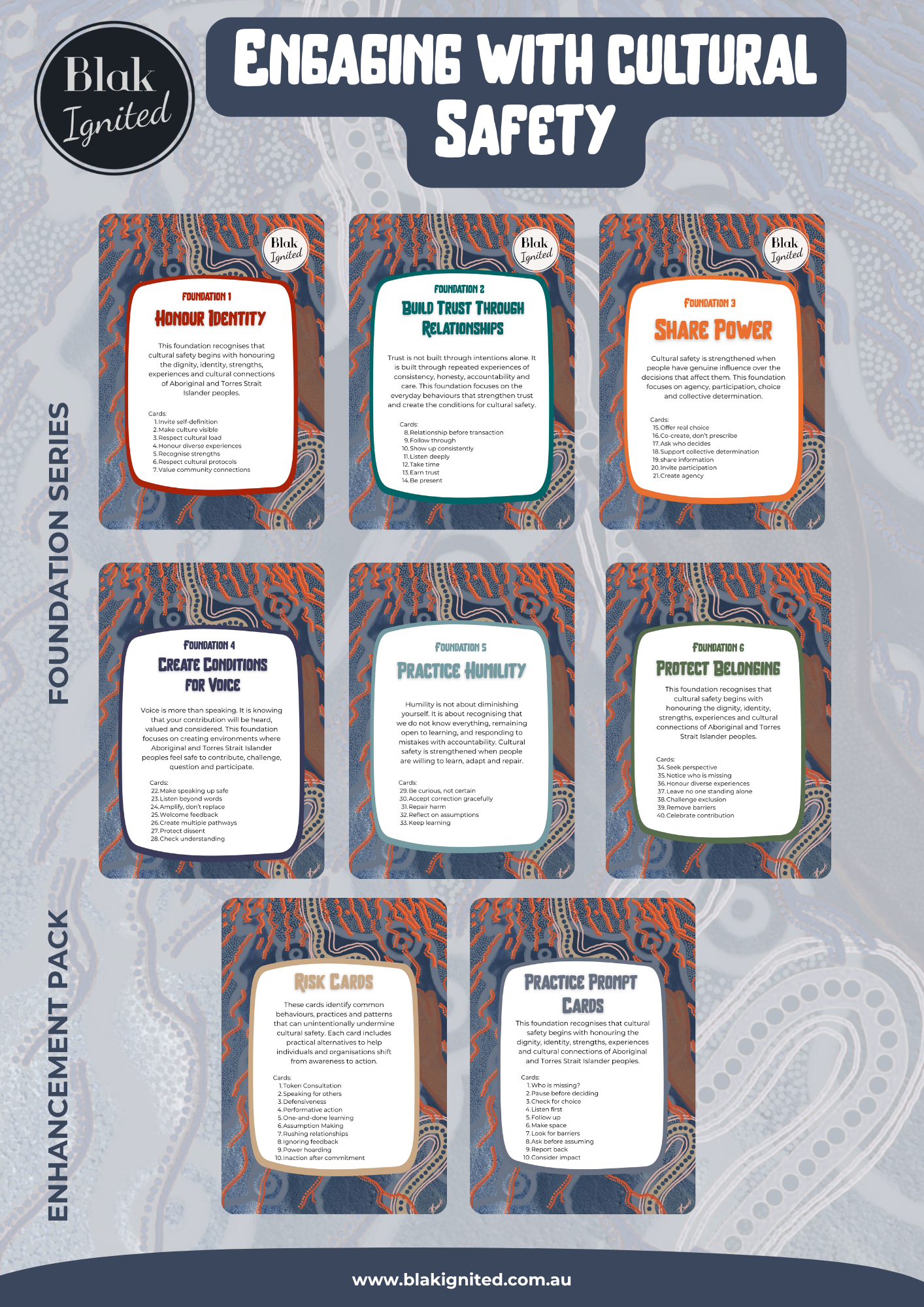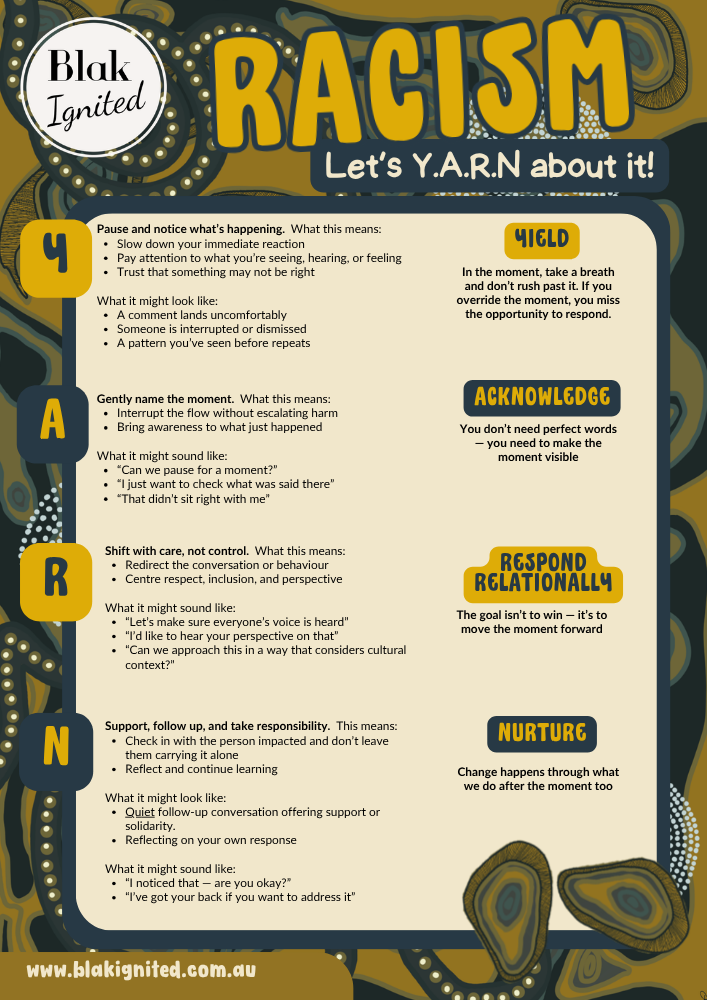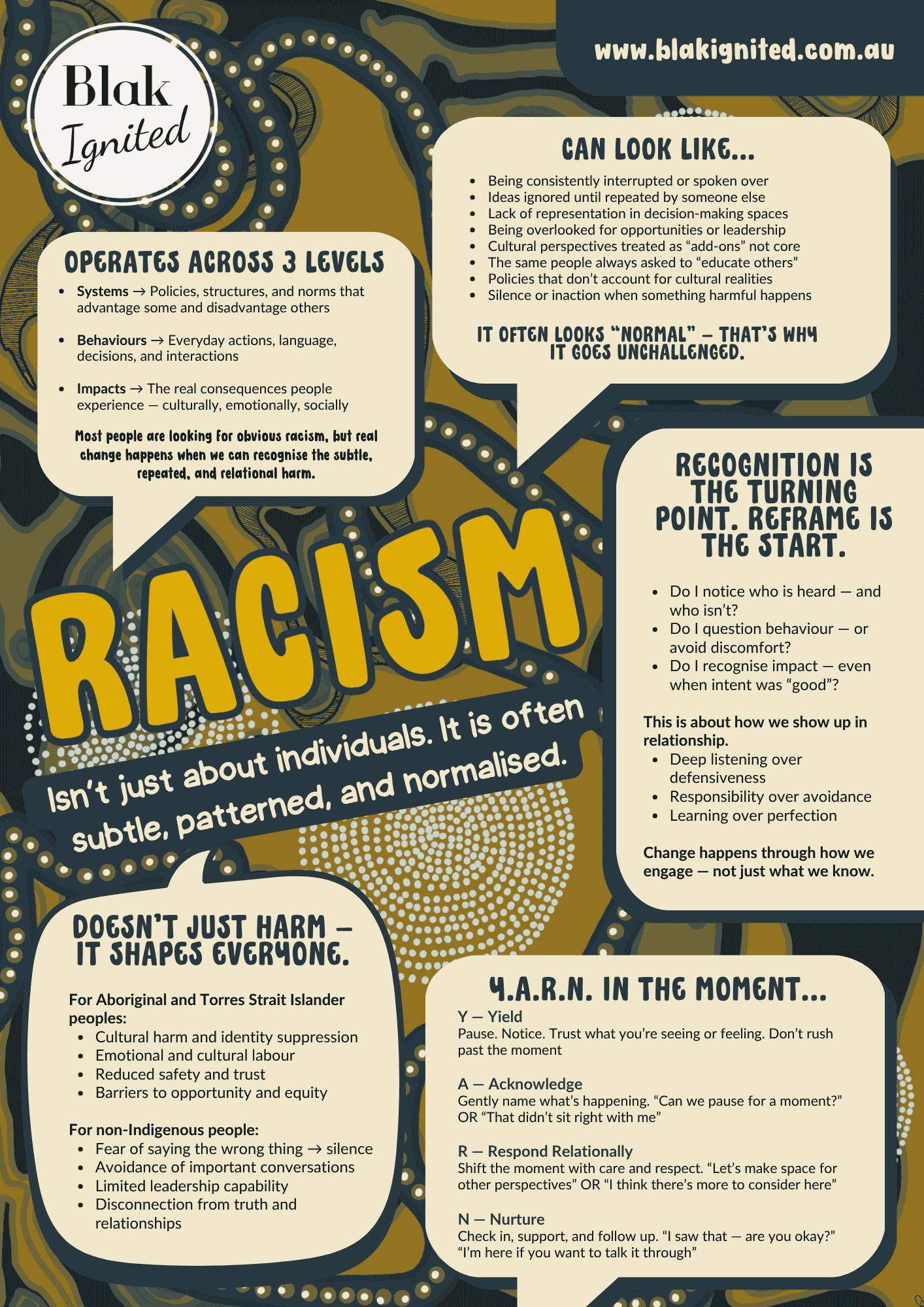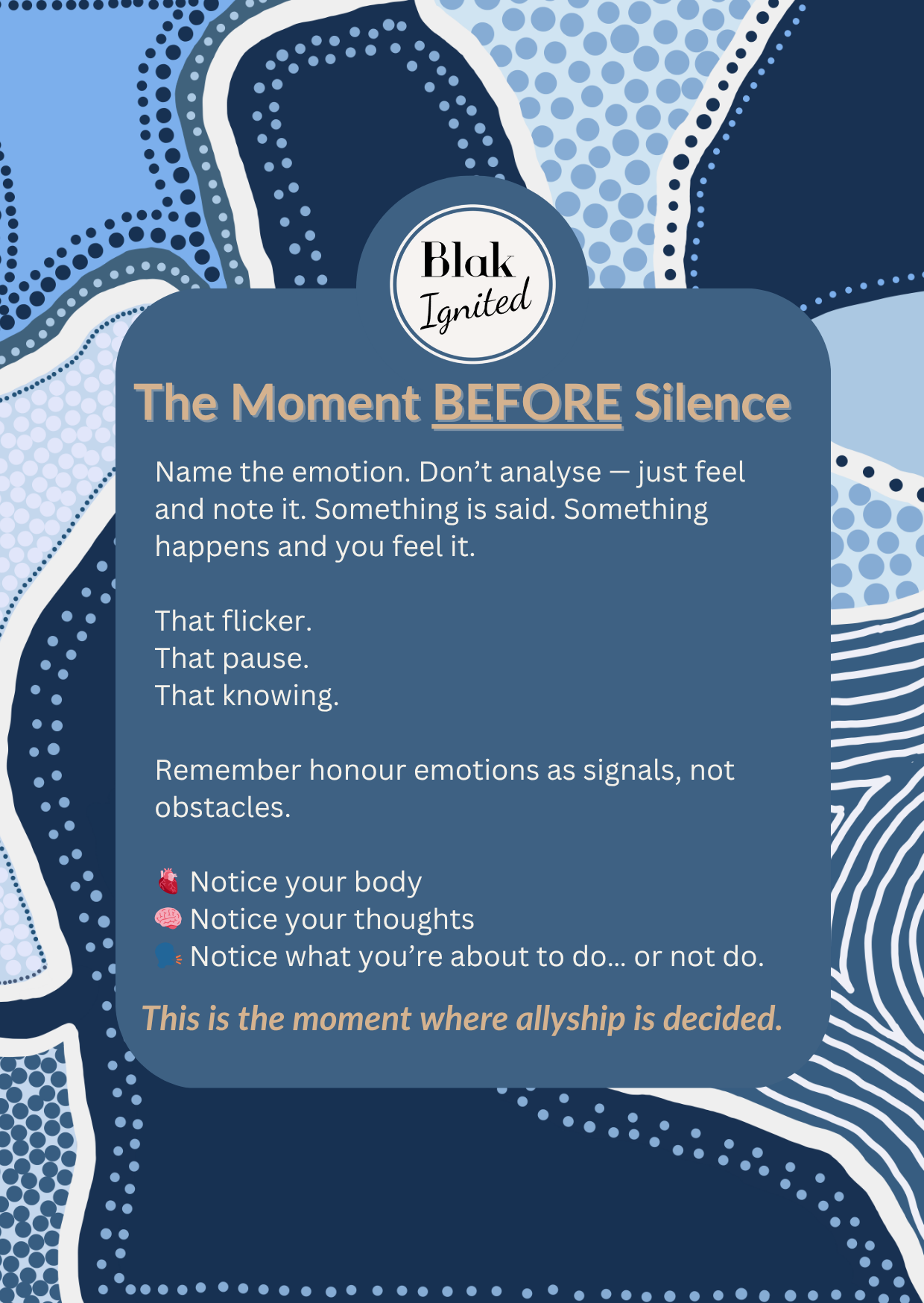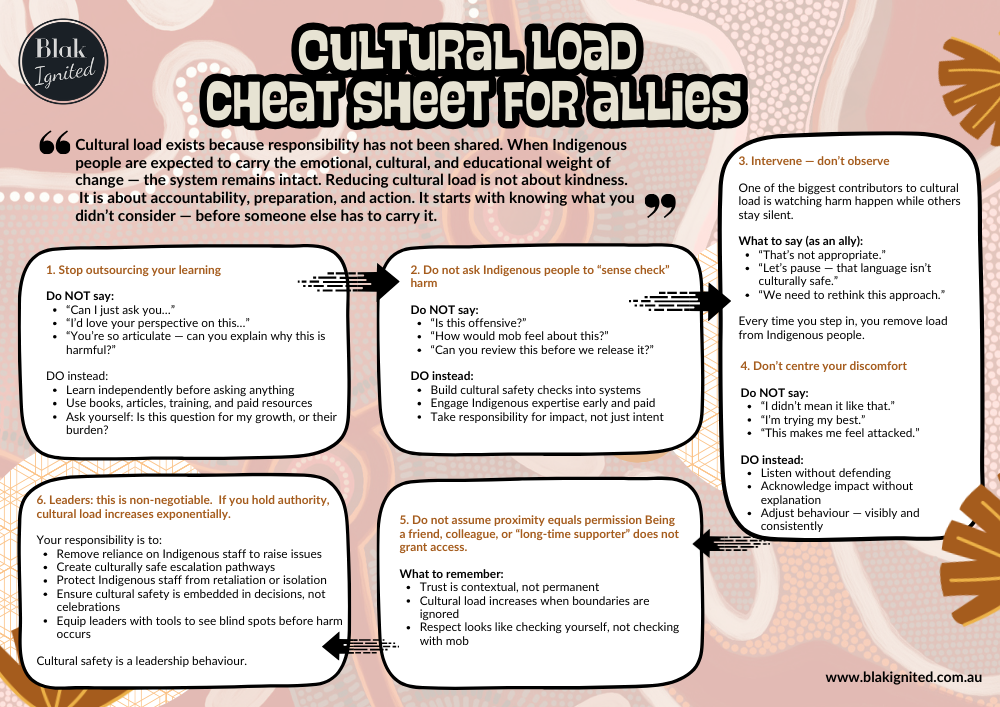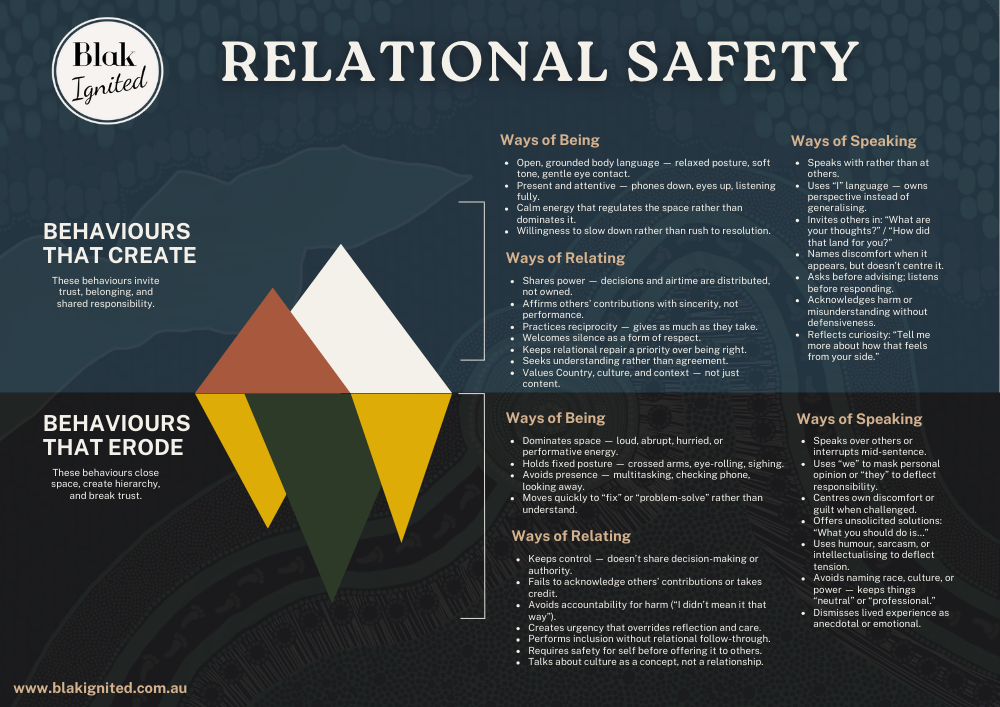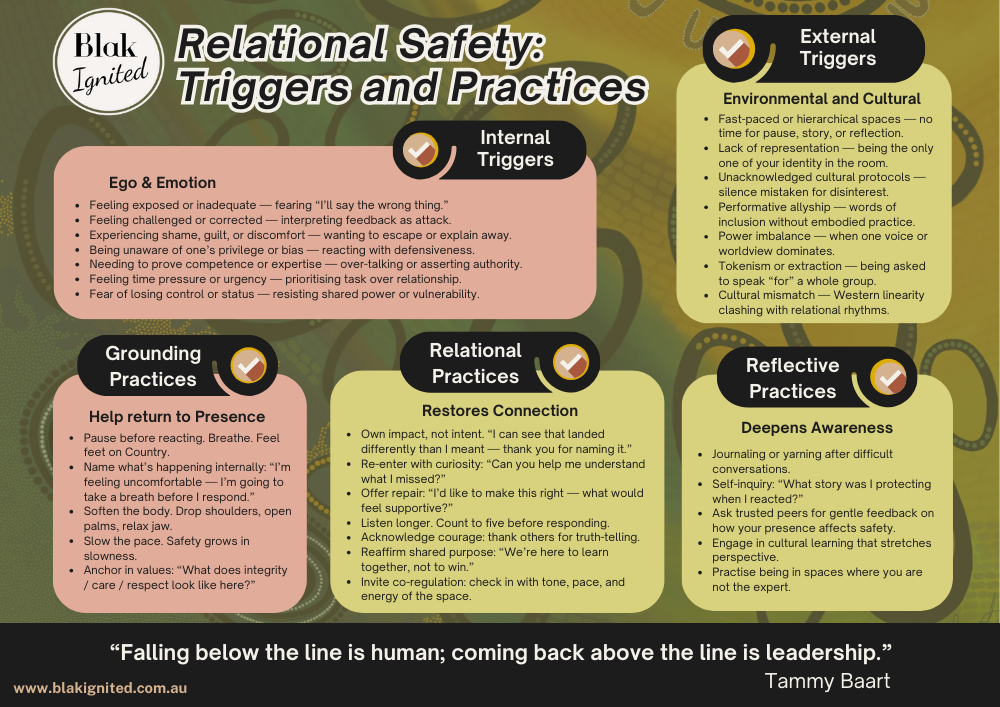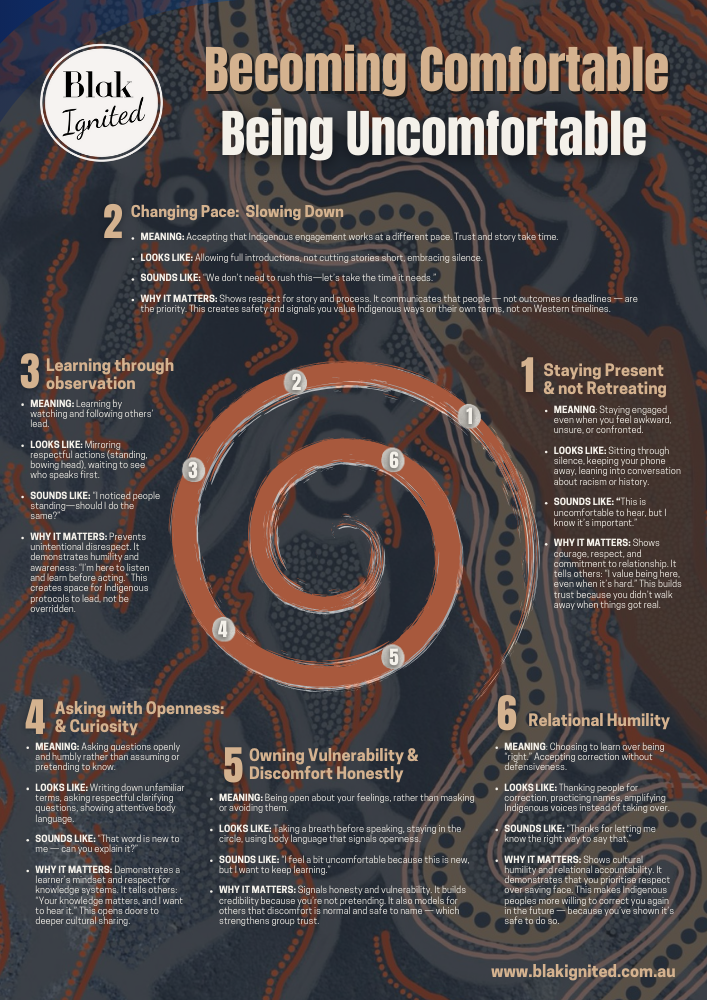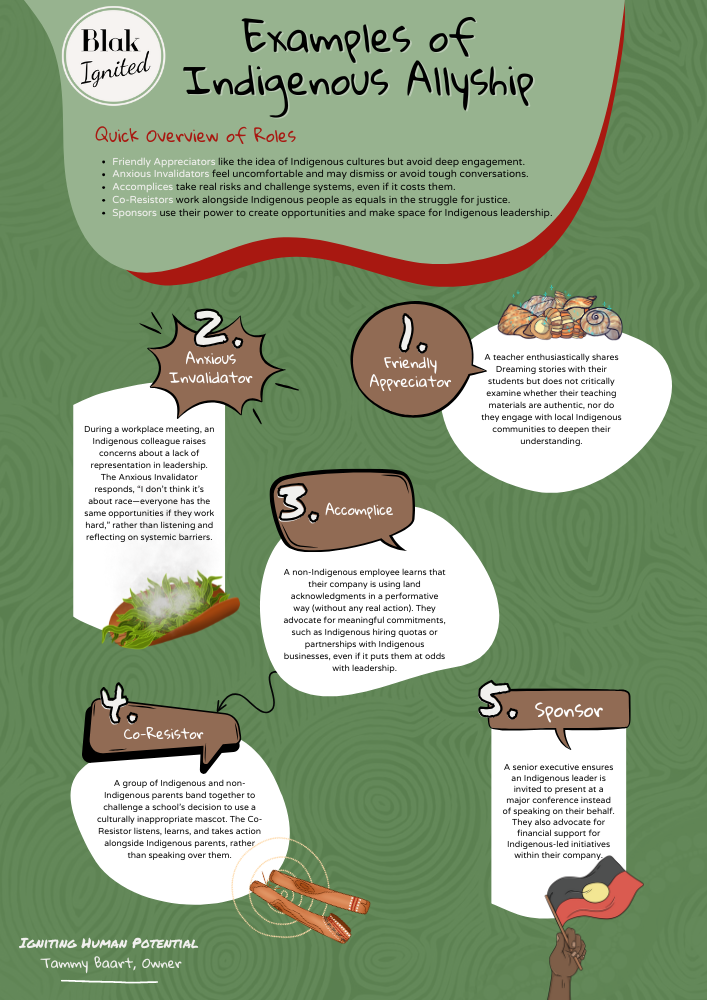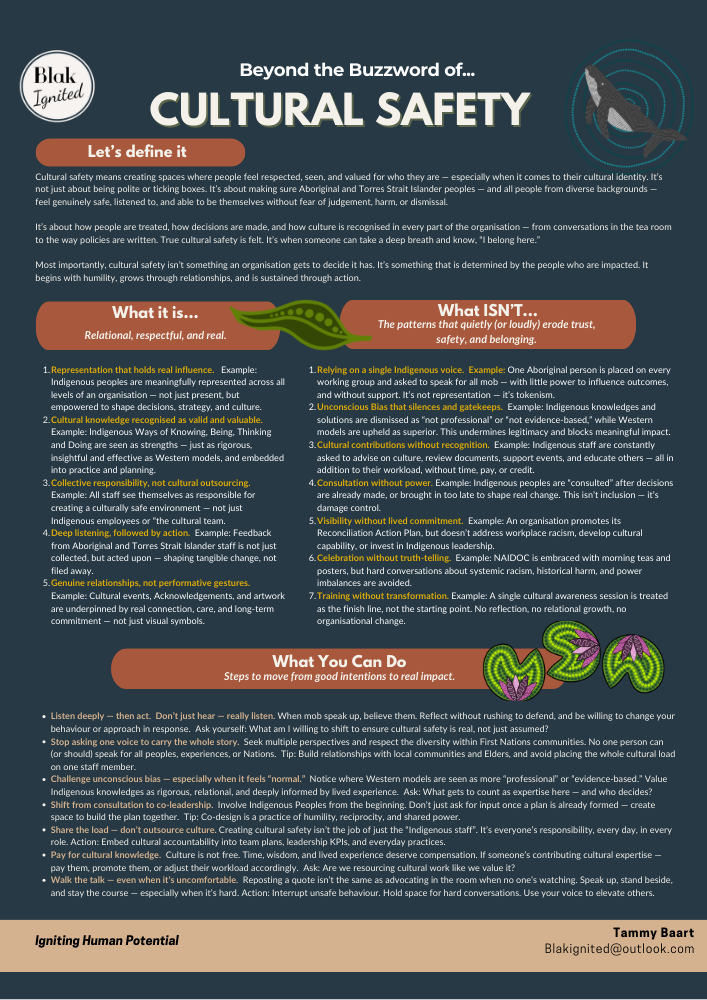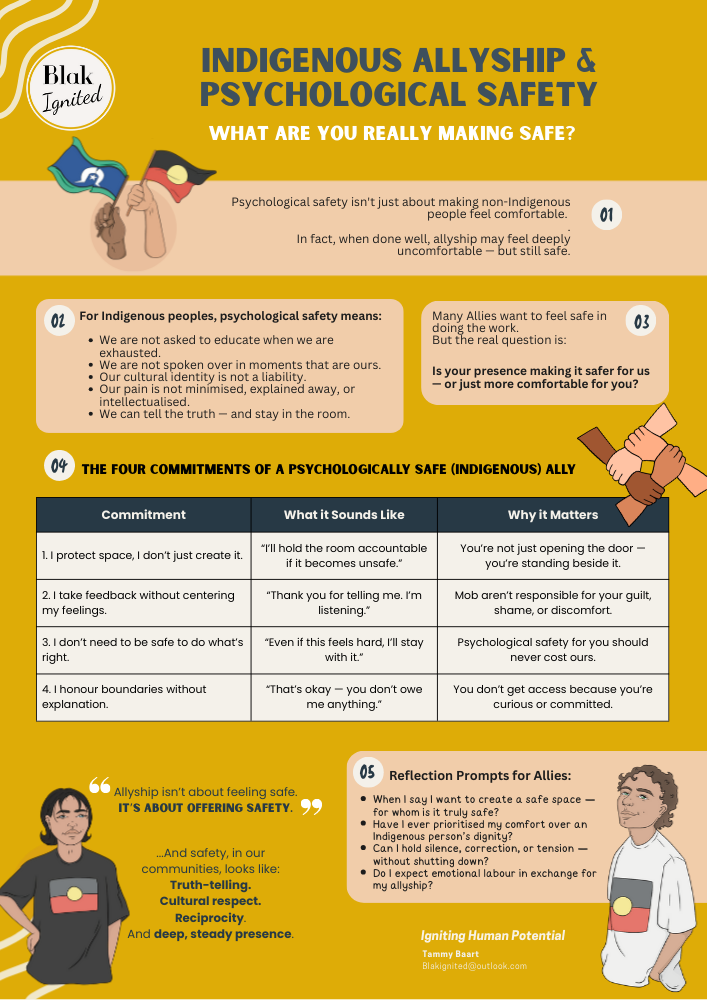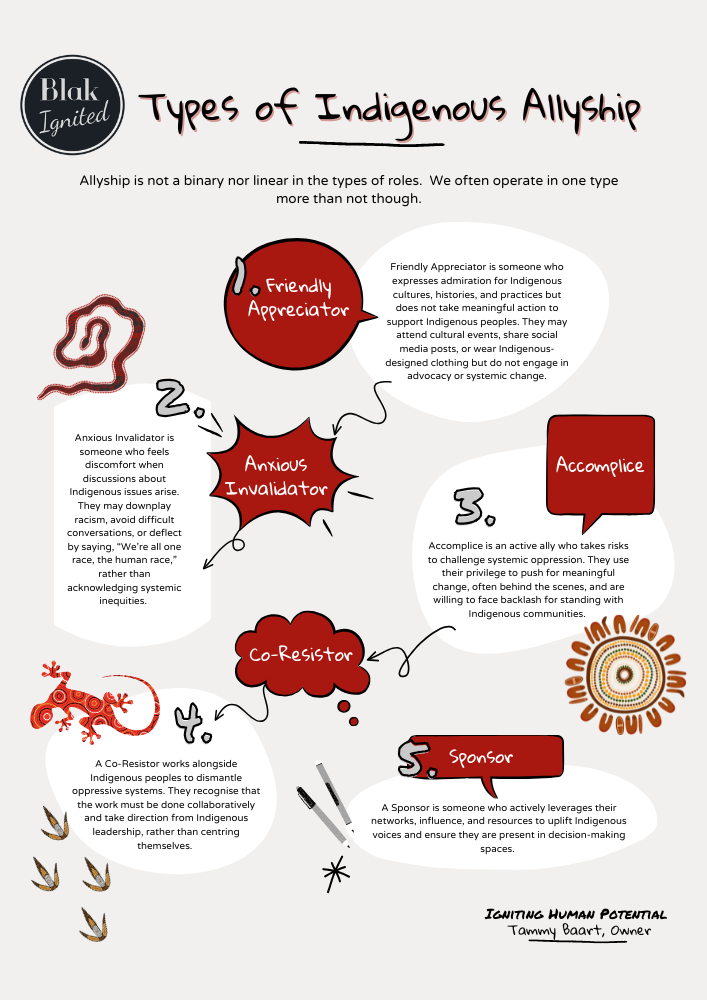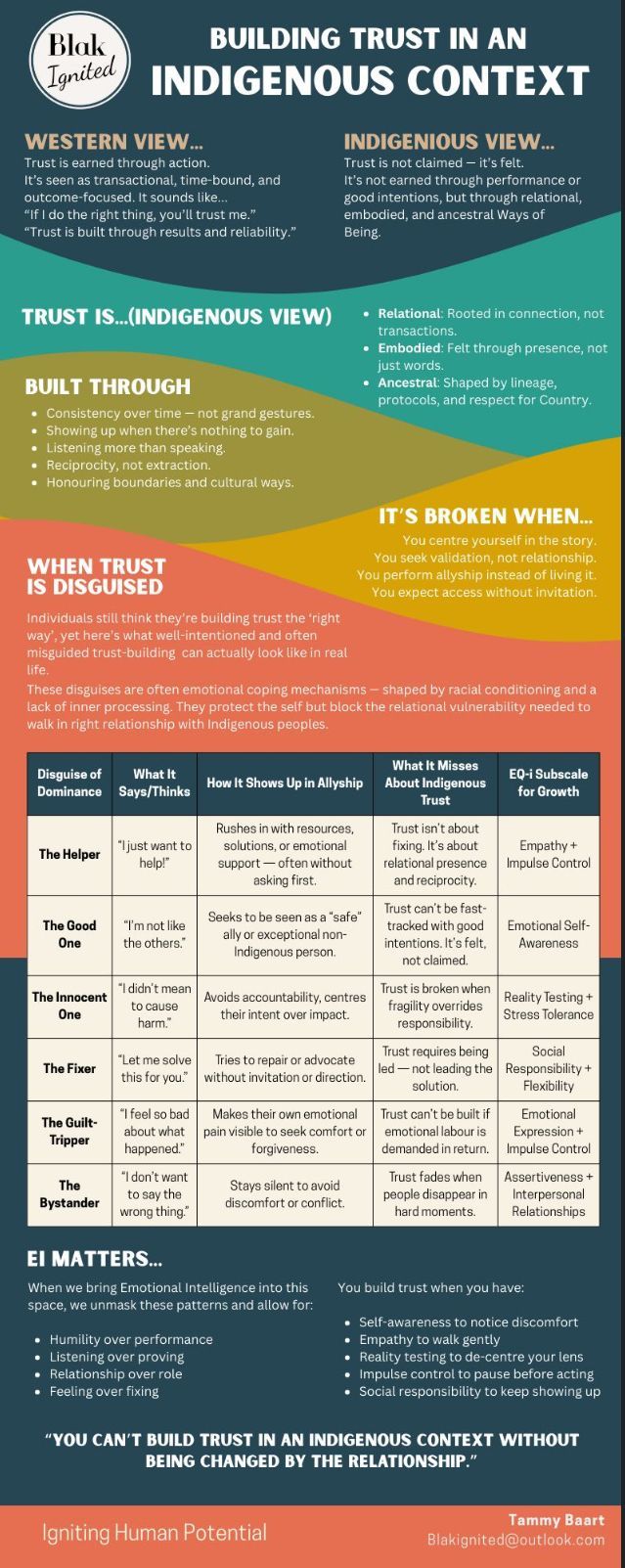




A grounded A3 visual resource that illustrates how Indigenous allyship shows up in real-life scenarios — helping individuals and organisations recognise patterns, intentions, and impact in everyday practice.
Full Description
This A3 visual framework brings allyship out of theory and into lived experience.
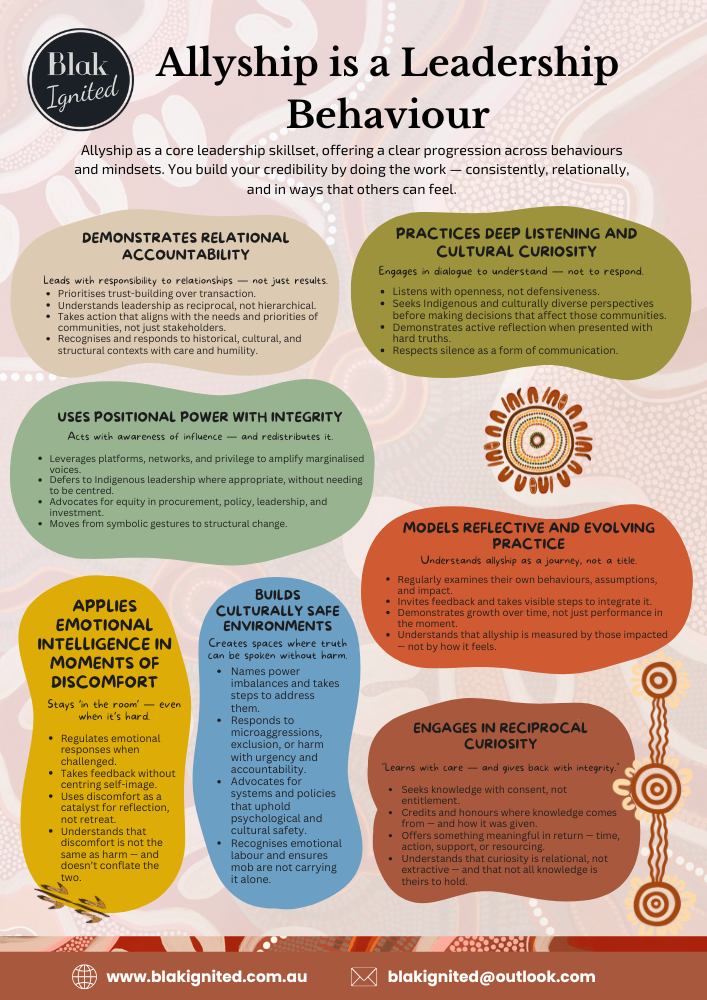
Examples of Indigenous Allyship offers clear, relatable scenarios that demonstrate how different allyship roles commonly appear in classrooms, workplaces, and organisational decision-making.
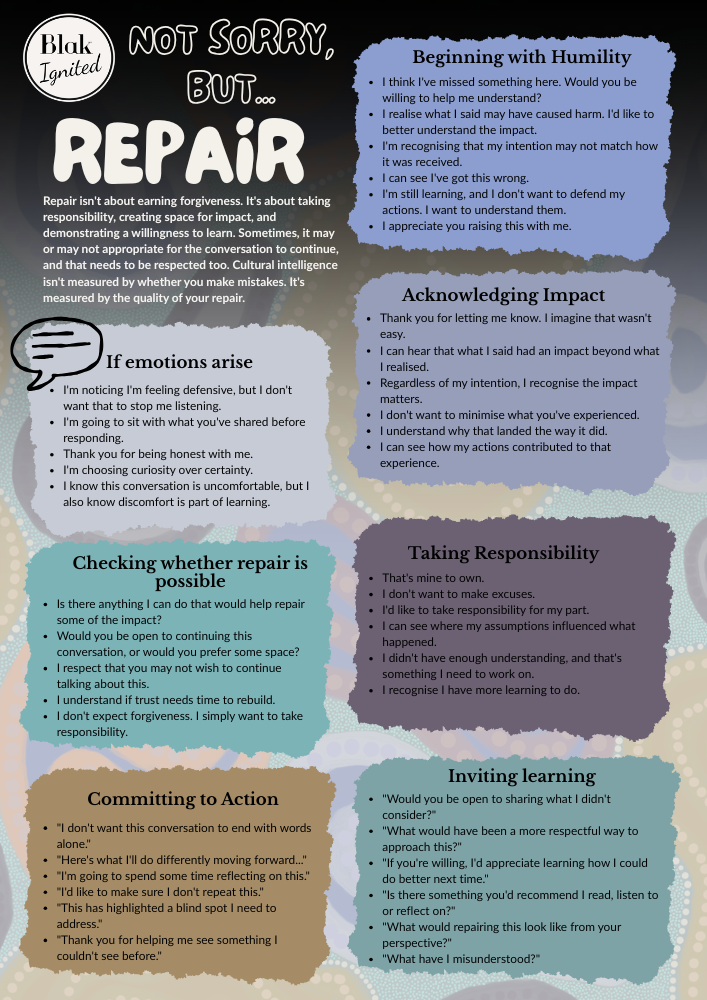
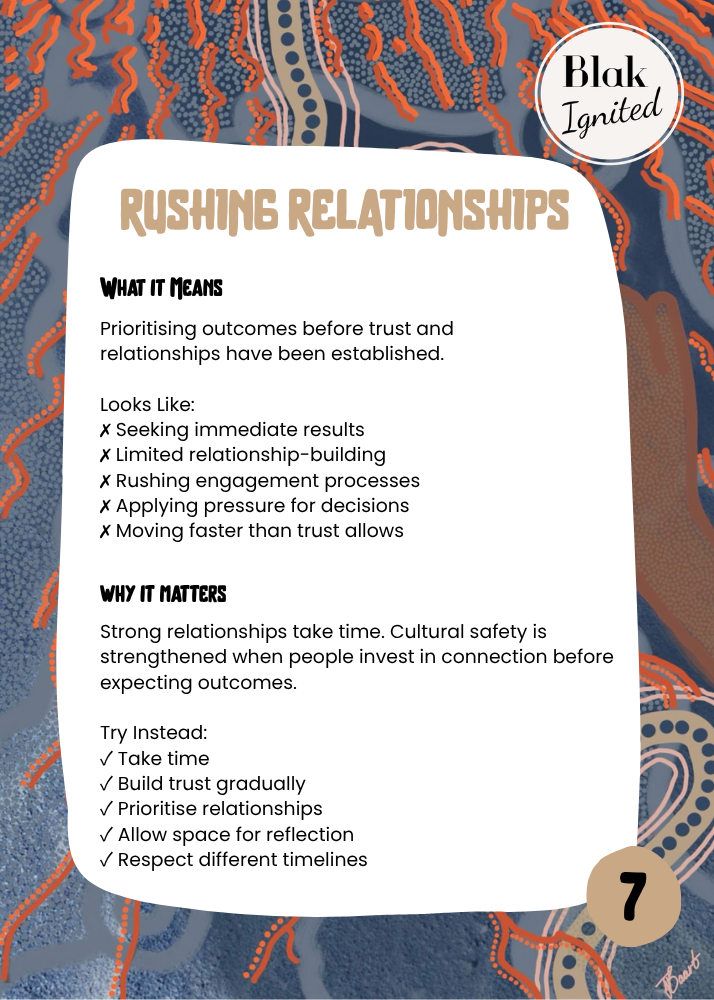
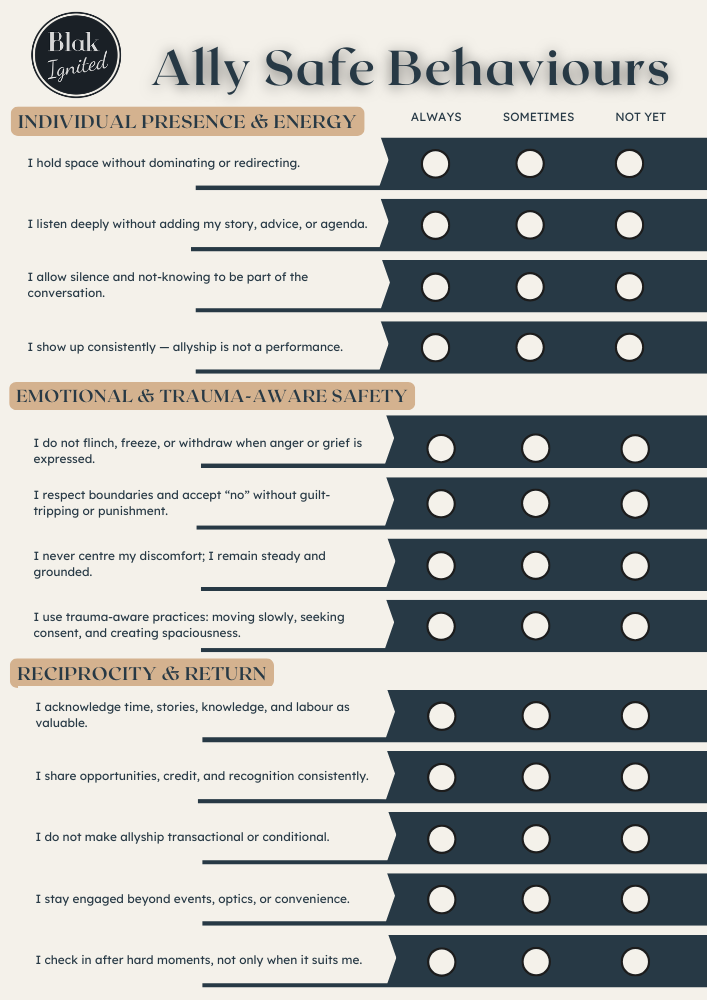
Building on the Types of Indigenous Allyship framework, this resource shows how behaviours — not intentions — shape trust, safety, and accountability. It highlights how well-meaning actions can unintentionally stall progress when discomfort, avoidance, or centring oneself takes over, and contrasts this with examples of allyship that involve risk, responsibility, and Indigenous-led action.
Rather than shaming or labelling, this resource invites honest reflection. It supports people to notice patterns, ask better questions, and understand how allyship evolves through learning, courage, and relationship.
What This Resource Supports
- Translating allyship concepts into practical, observable behaviour
- Identifying common allyship patterns in workplaces and schools
- Supporting reflective conversations without defensiveness
- Building shared language for teams and leaders
- Encouraging movement toward accountable, Indigenous-led allyship
What’s Included
- 1 x A3 printable PDF
- Full-colour illustrated scenarios
- Designed for individual reflection and group facilitation
Recommended For
- Educators and school leadership teams
- Workplace facilitators and cultural safety practitioners
- RAP committees and governance groups
- Professional learning and allyship workshops
- Individuals seeking deeper clarity around allyship in practice
Suggested Use
- As a companion to Types of Indigenous Allyship
- For scenario-based discussion and professional learning
- In team reflection sessions or leadership development
- As a visual anchor during allyship or cultural safety conversations
Indigenous Cultural & Intellectual Property (ICIP) Notice
This resource is protected under Indigenous Cultural and Intellectual Property (ICIP).
Purchase provides a single-user licence for personal or internal educational use only.
This resource may not be reproduced, shared, adapted, or distributed beyond the purchasing organisation or individual without written permission.
Engage with this resource respectfully, recognising that allyship is a practice shaped through behaviour, accountability, and relationship — not a label or identity.
jkhkjh
$15.95
SPECIFICATIONS
Format
- Digital Download (PDF)
- Size: A3
HOW TO USE
DETAILS

BESTSELLERS
You may also like
-
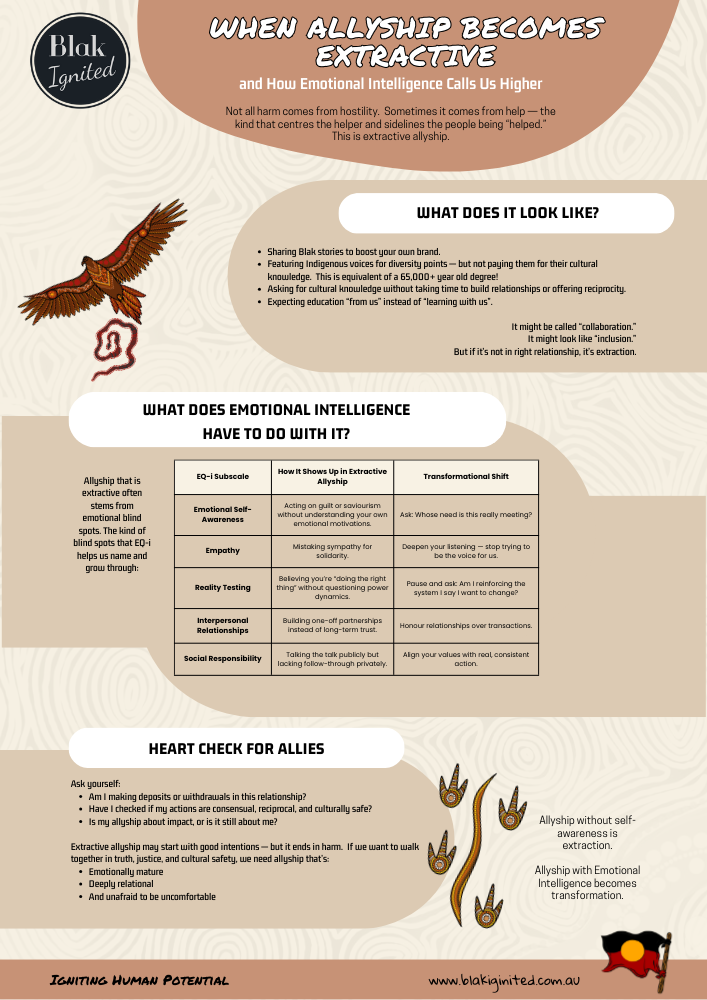
When Allyship Becomes Extractive
$19.95* Includes taxesButton -
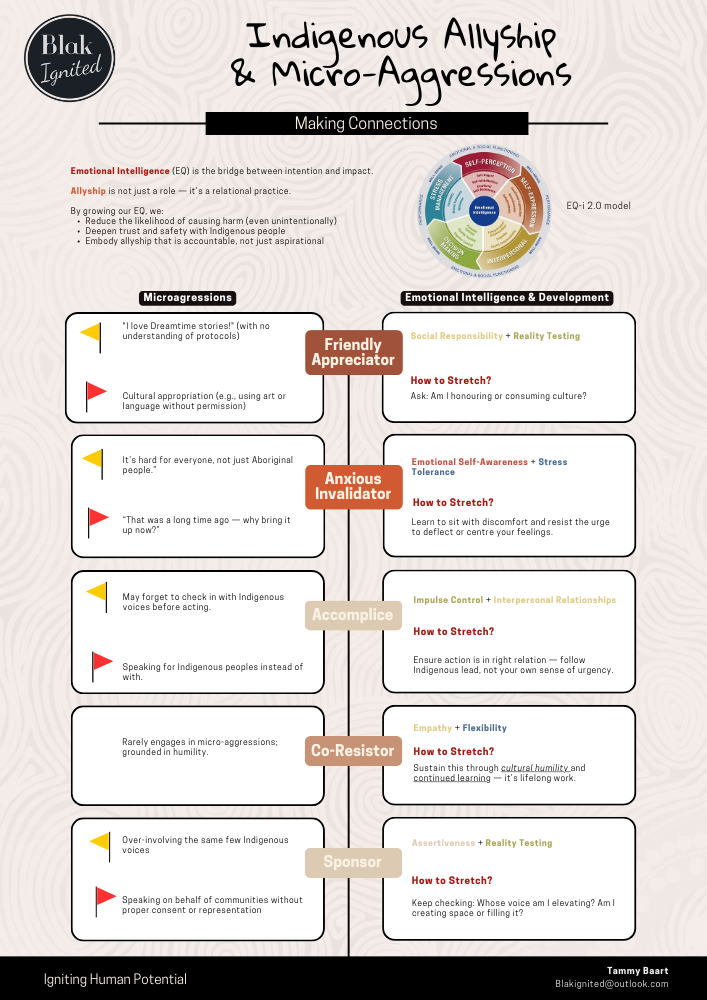
Indigenous Allyship Micro-Agressions
$15.95* Includes taxesButton -
Examples Indigenous Allyship
$15.95* Includes taxesButton -
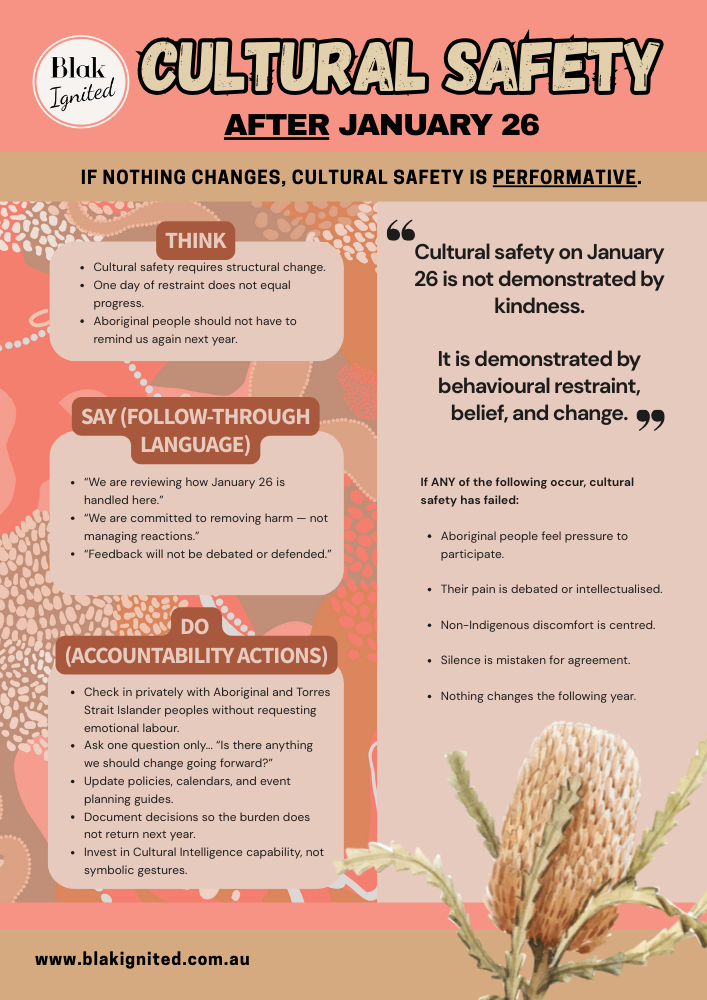
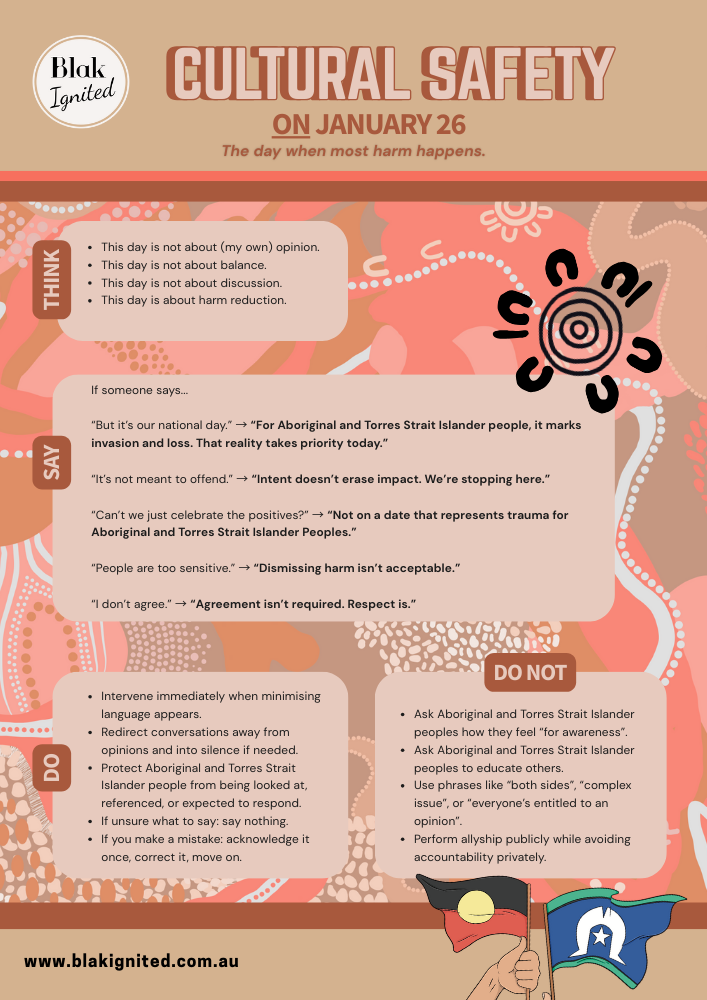
Cultural Safety
$19.95* Includes taxesButton -
Indigenous Allyship Psychological Safety
$19.95* Includes taxesButton -
Types of Allies
$19.95* Includes taxesButton -
Building Trust in Indigenous Context
$19.95* Includes taxesButton